Despite its sombre name, the Day of the Dead celebrations (Día de Muertos) in Mexico couldn’t be far from dreadful: the country wraps itself in flowers, music, and colourful cheery skeletons.
This cherished tradition, deeply ingrained in the Mexican culture, is inscribed in UNESCO’s Representative List of the Intangible Cultural Heritage of Humanity.
The official dates are November 1st and 2nd, but the celebrations typically span from October 31st and, in some places, a few days beyond the 2nd. Even though it happens around the same dates, this isn’t a “Mexican Halloween”. This is a celebration to welcome the dead when, supposedly, they pay a short visit to this world.
Some historians believe it originated from Catholic celebrations like All Saints Day and All Soul’s Day, some say it has pre-Hispanic roots, and others think it’s a mix.
Beyond the debate and whoever is right, what stands out is the beauty of the elaborate altars and the parades.
All the states join the festivities, each one with its own twist. Playa del Carmen -in the state of Quintana Roo where they call the celebration Hanal Pixán (meaning “Food of the Souls”)- adds some Mayan traditions to the mix.
Disclosure: This post contains some affiliate links. If you make a purchase through those links I will earn a commission at no additional cost to you (zero, nada). To check the full disclaimer, click here.
This is how to celebrate the Day of the Dead in Playa del Carmen
See the Installations along Quinta Avenida
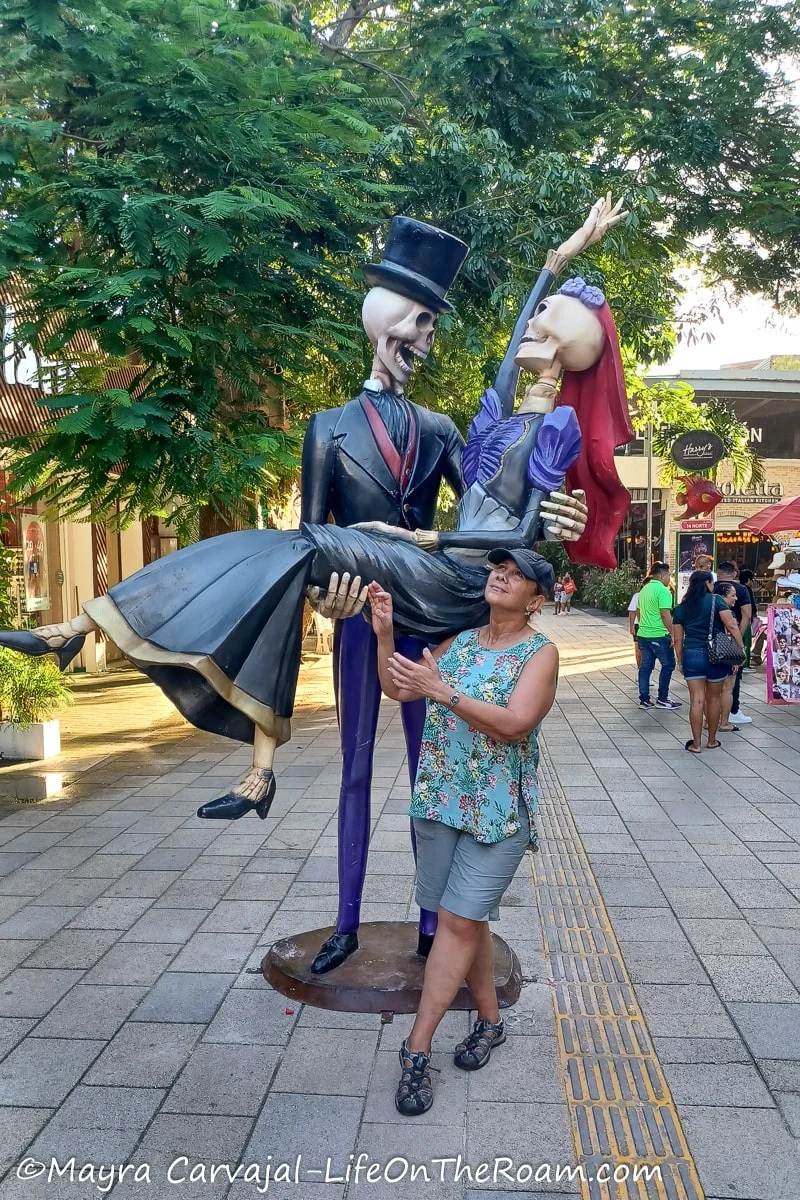
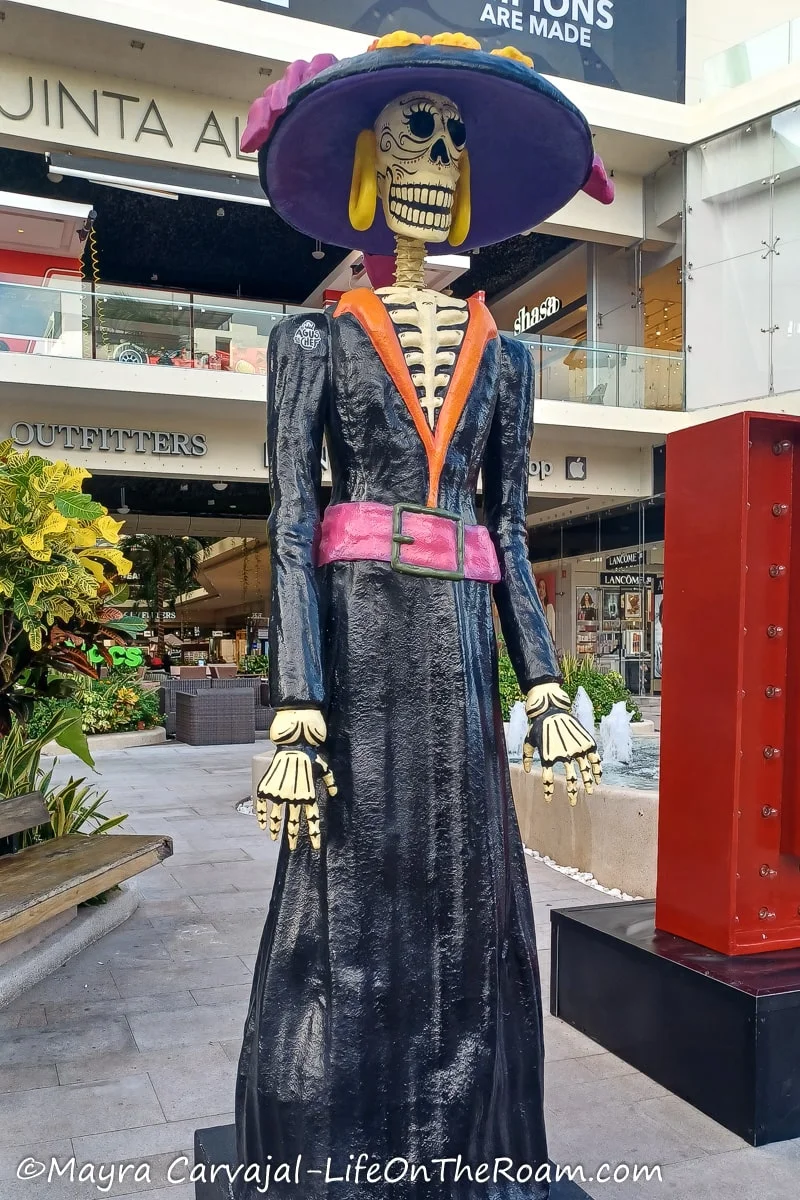
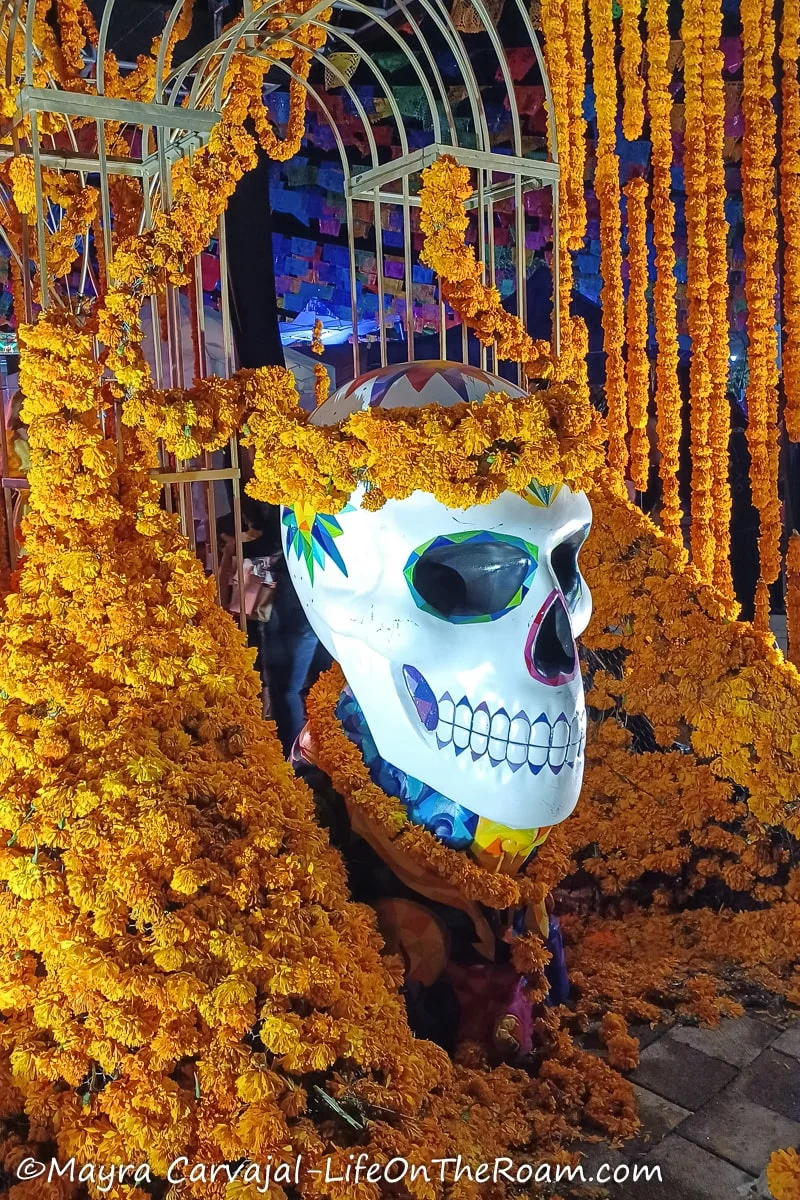
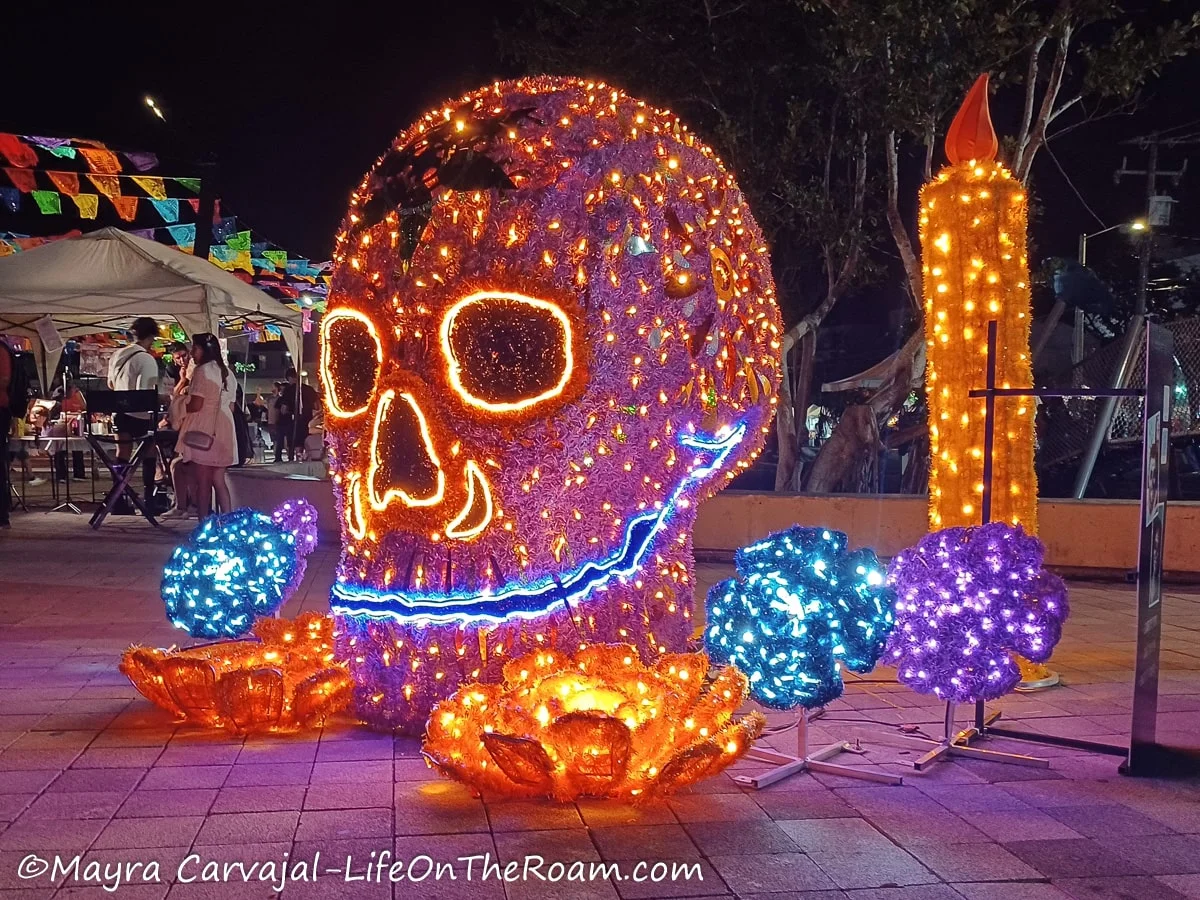
Walk along this looong pedestrian street to find all sorts of large skeleton figures in different outfits, great for fun photo ops.
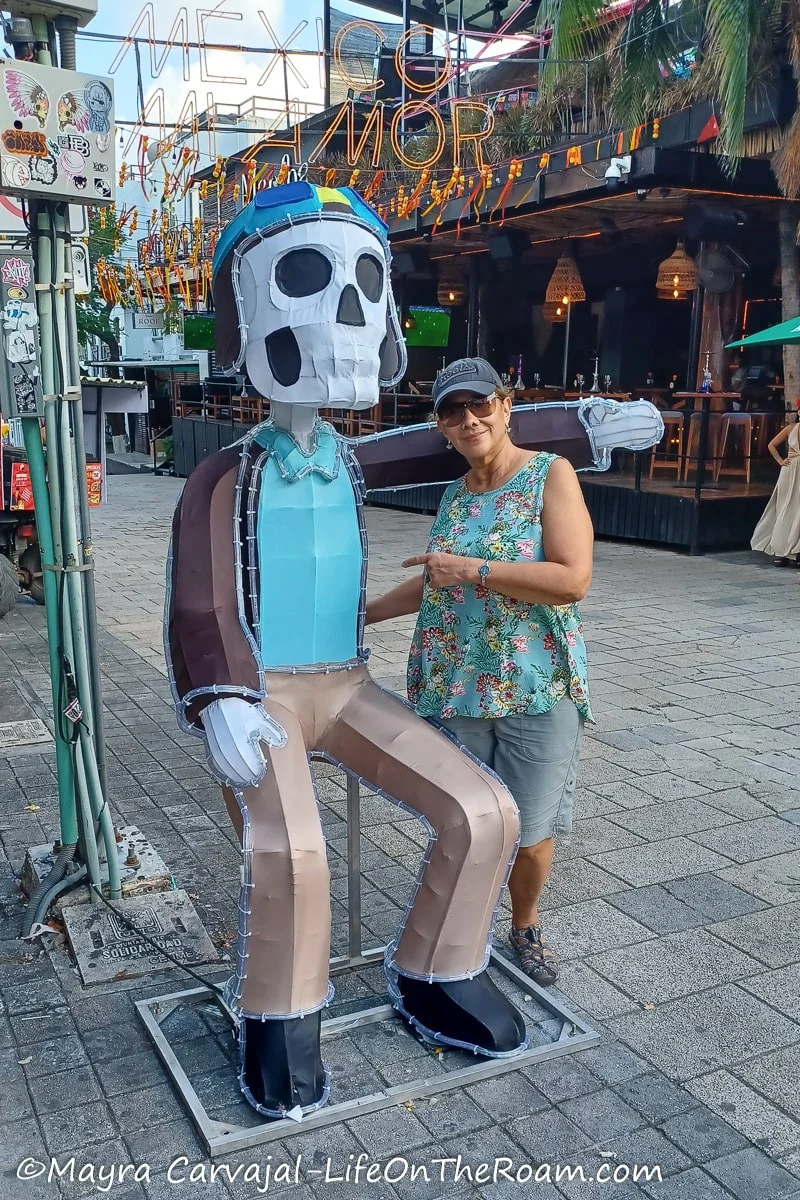
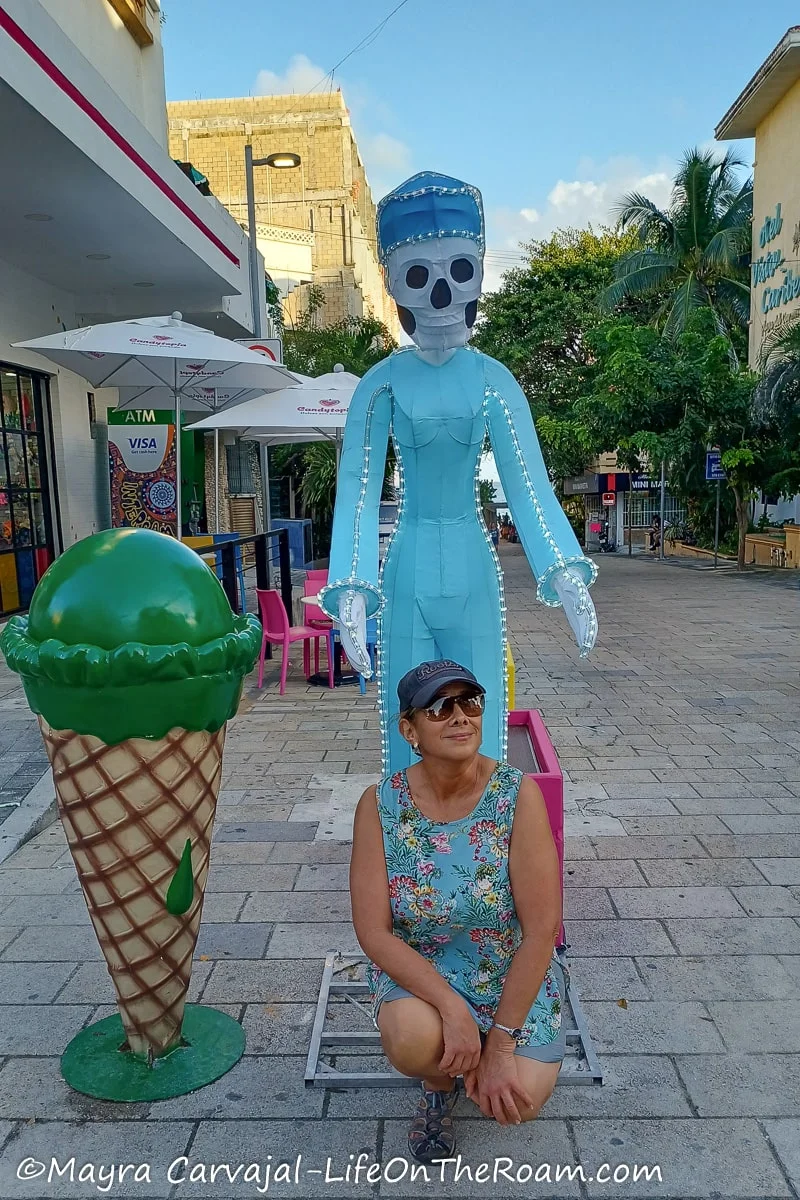
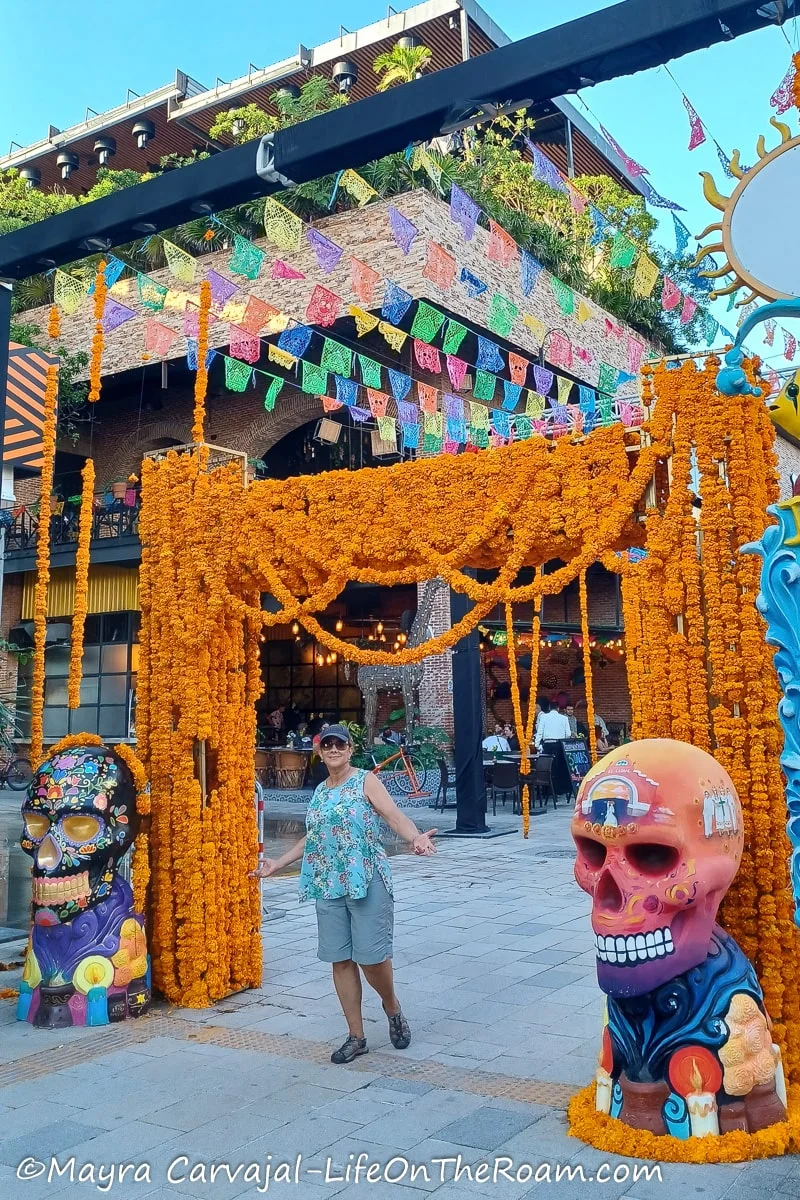
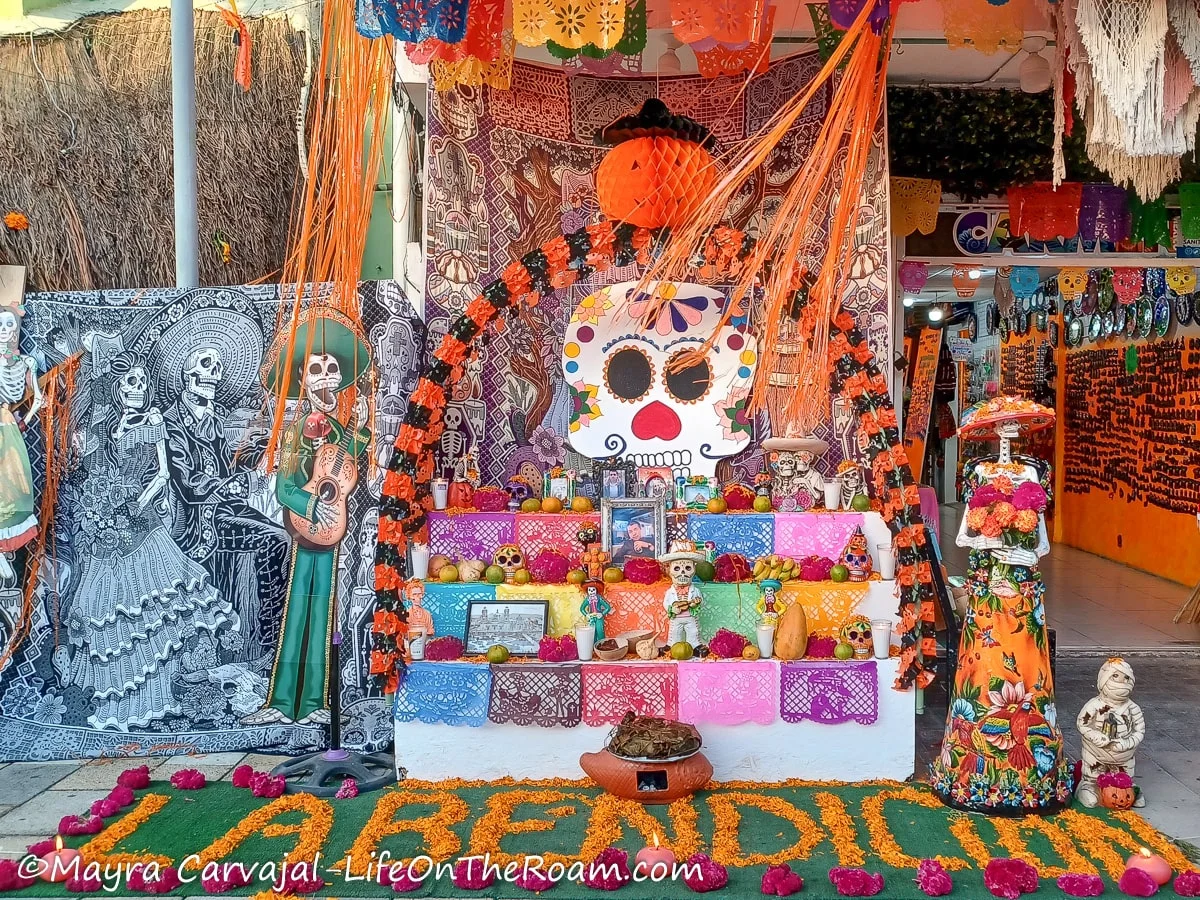
Arches covered in marigold flowers lookalike, huge painted skulls, and altars outside the shops will keep you entertained. Also check out the displays at the few malls along Quinta for more photo ops.
Go to the City Hall (Palacio Municipal)
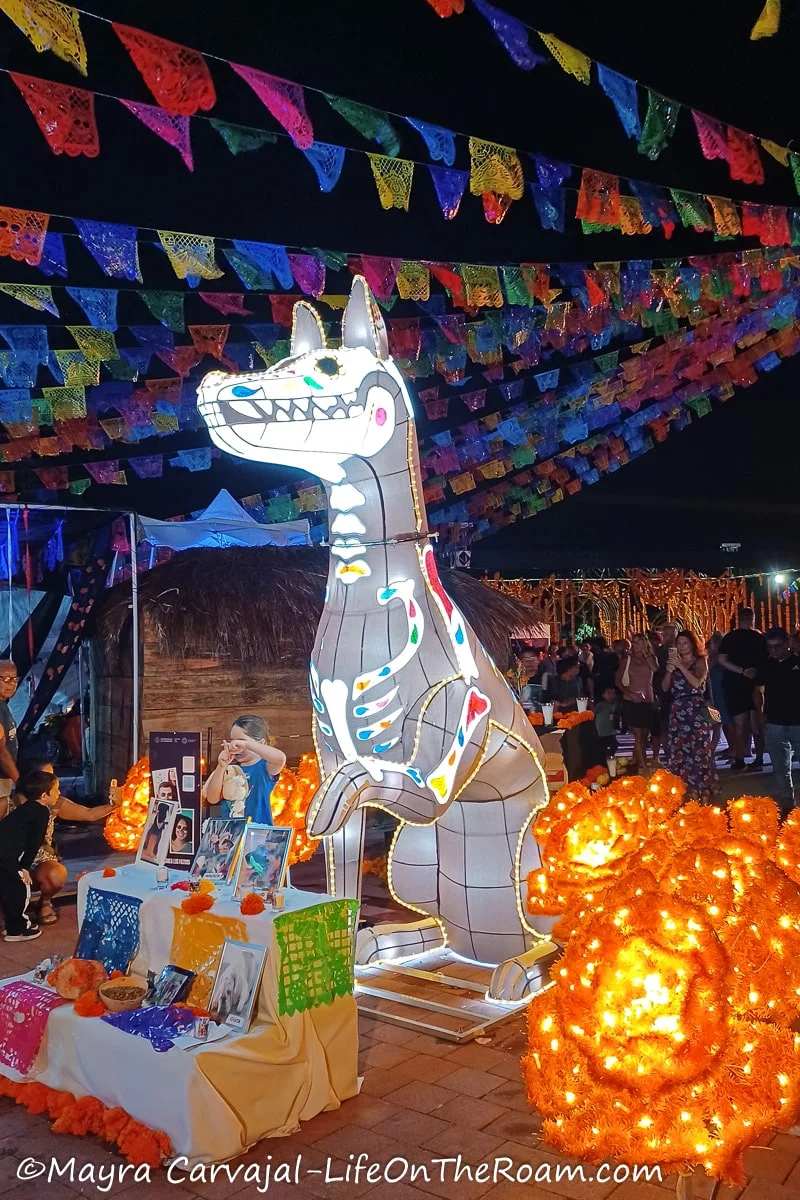
The City Hall square (Plaza 28 de julio) is the epicentre of the Day of the Dead celebrations in Playa del Carmen. This is where you’ll see the most elaborate altars holding offerings (ofrendas). According to the indigenous tradition, families prepare multilevel altars as a welcome to their loved ones during their short visit to the world of the living.
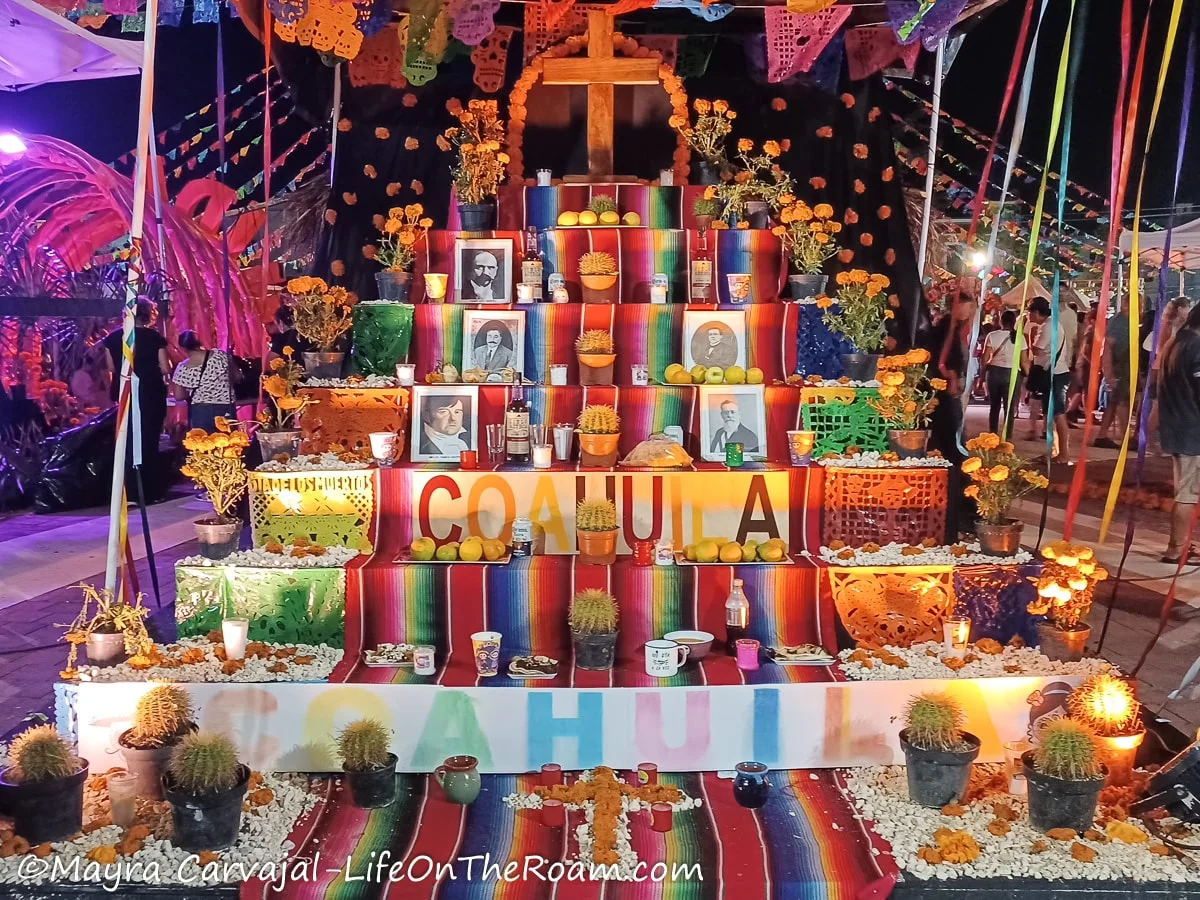
Several states from Mexico participate in the event, with details unique to their region and displaying their name prominently. For example, in the installation from Puebla you can see the Talavera pattern, which is a distinctive feature from that state.
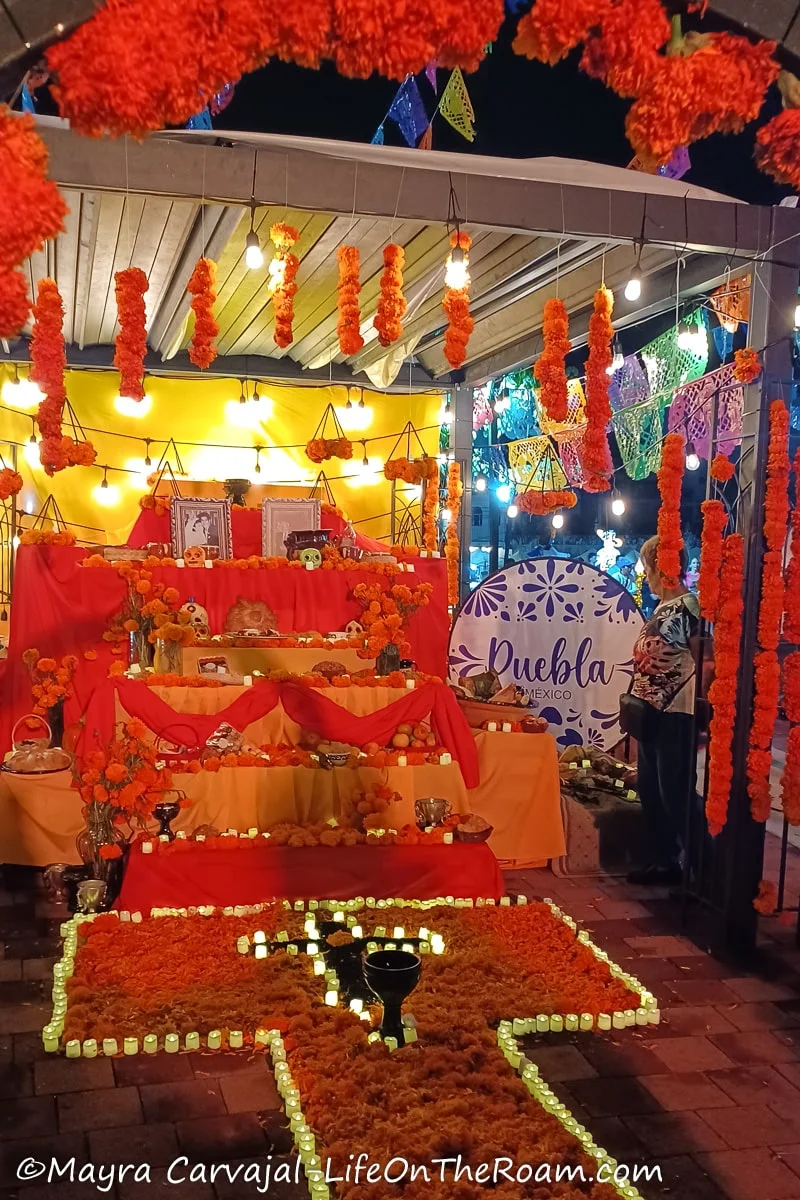
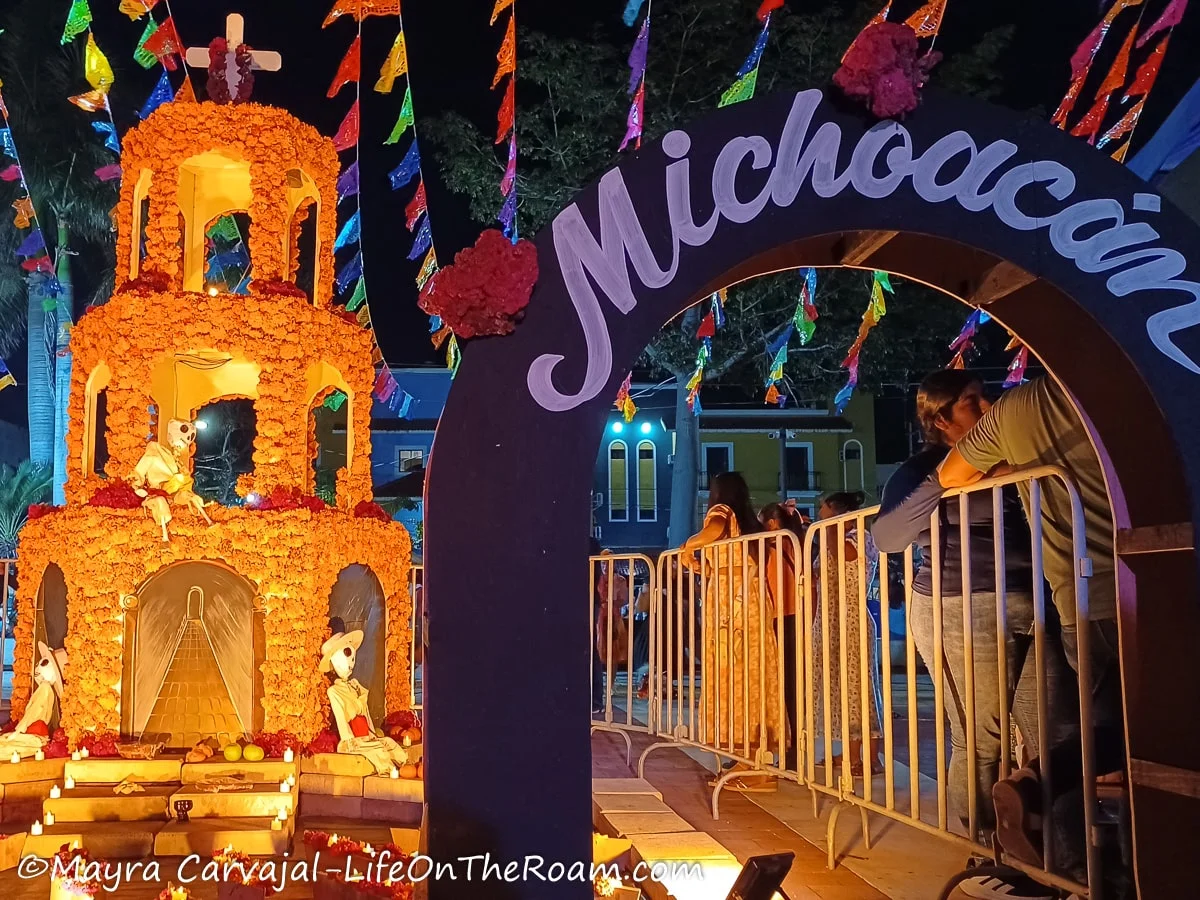
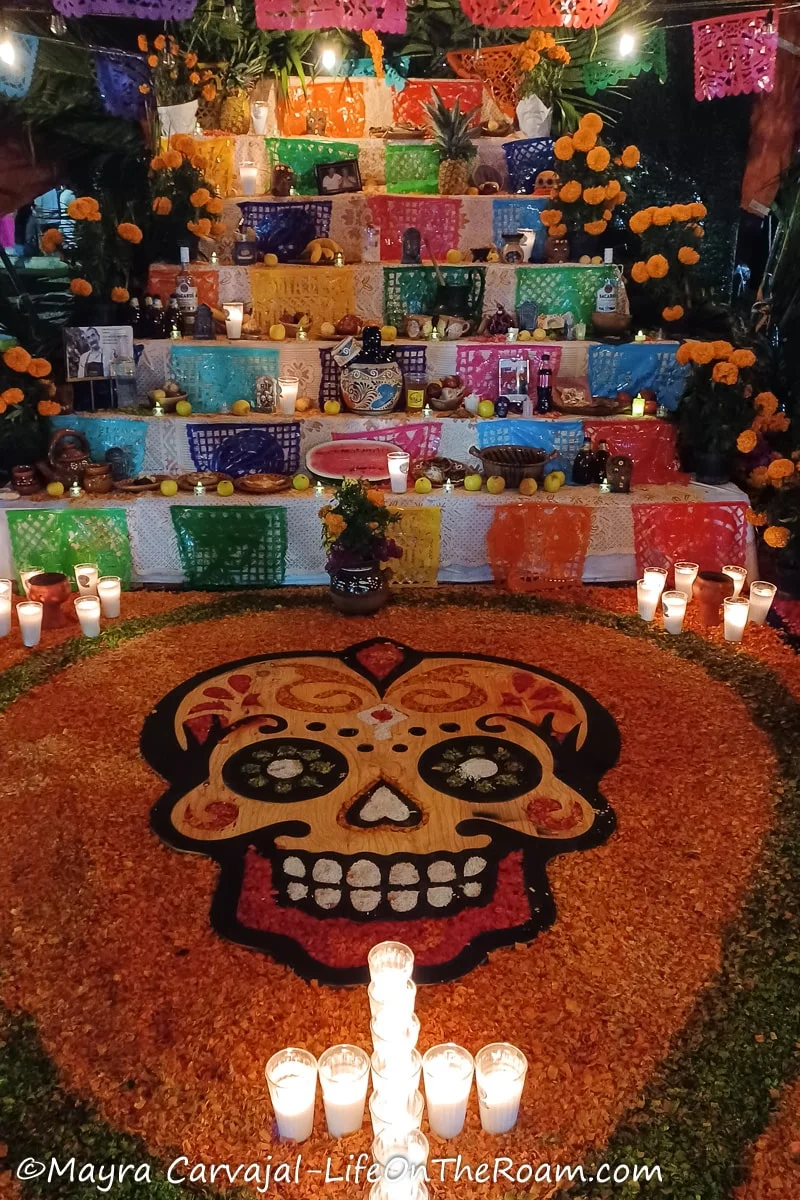
You’ll see them adorned with marigold flowers (cempazúchitl or Flor de Muerto), the deceased’s favourite foods and drinks and their pictures, handicrafts, sugar skulls (calaveras), candles, and perforated paper (papel picado).
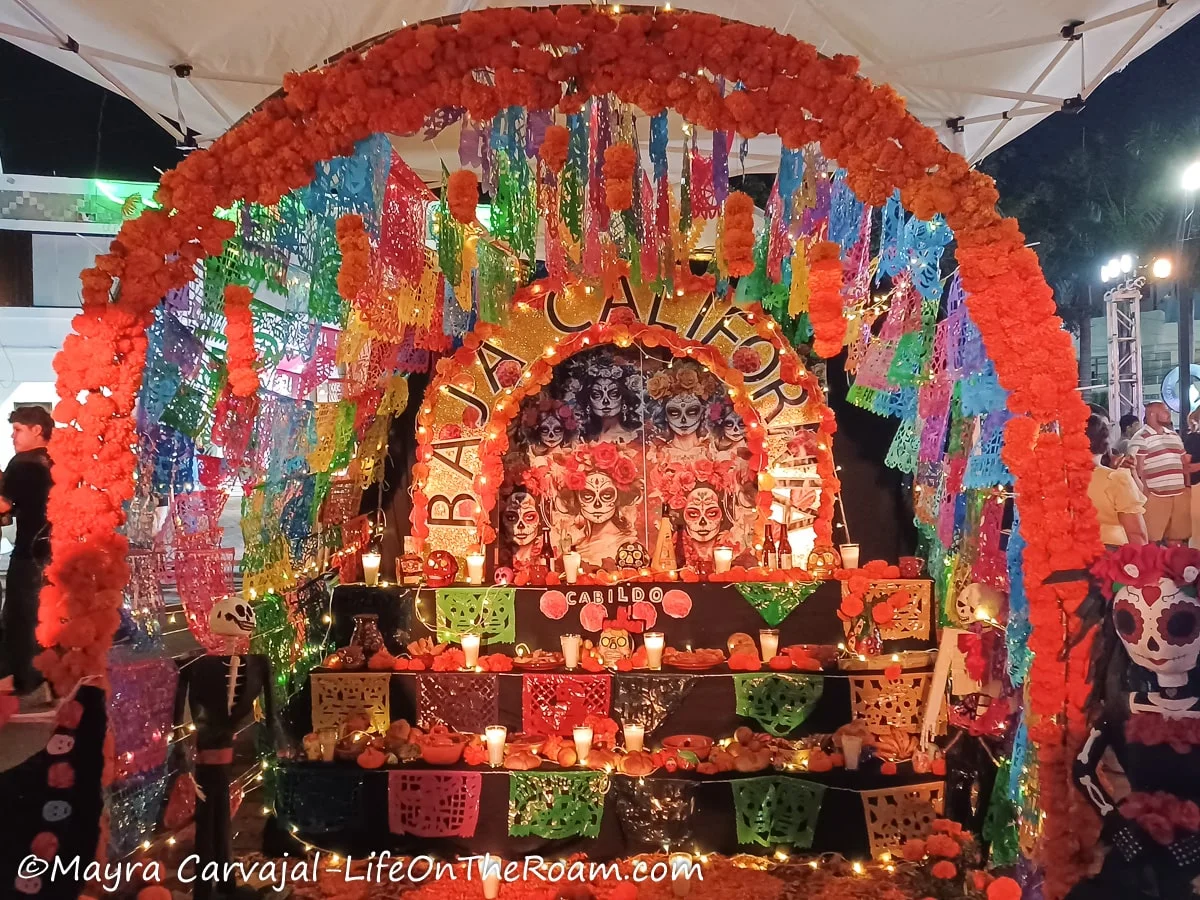
You’ll also find more funny skeletons, decorated arches with colourful skulls, and live performances across the square and in the amphitheatre.
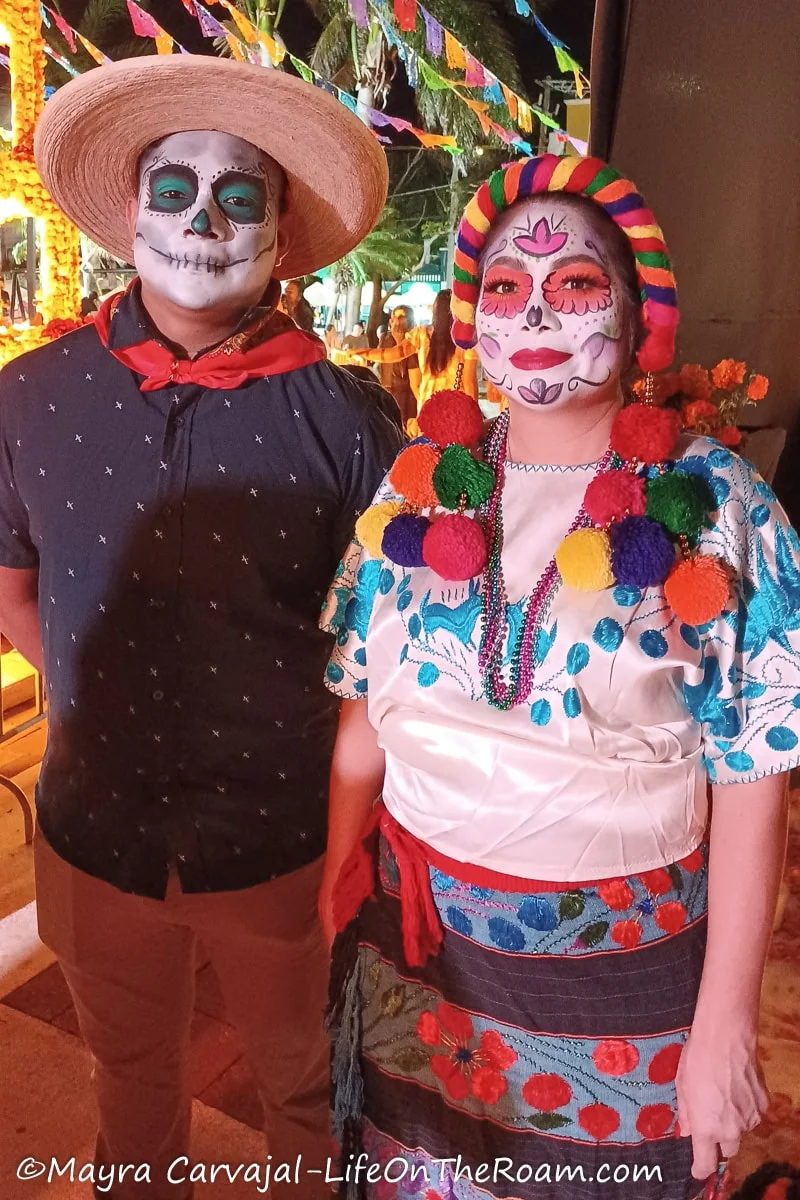
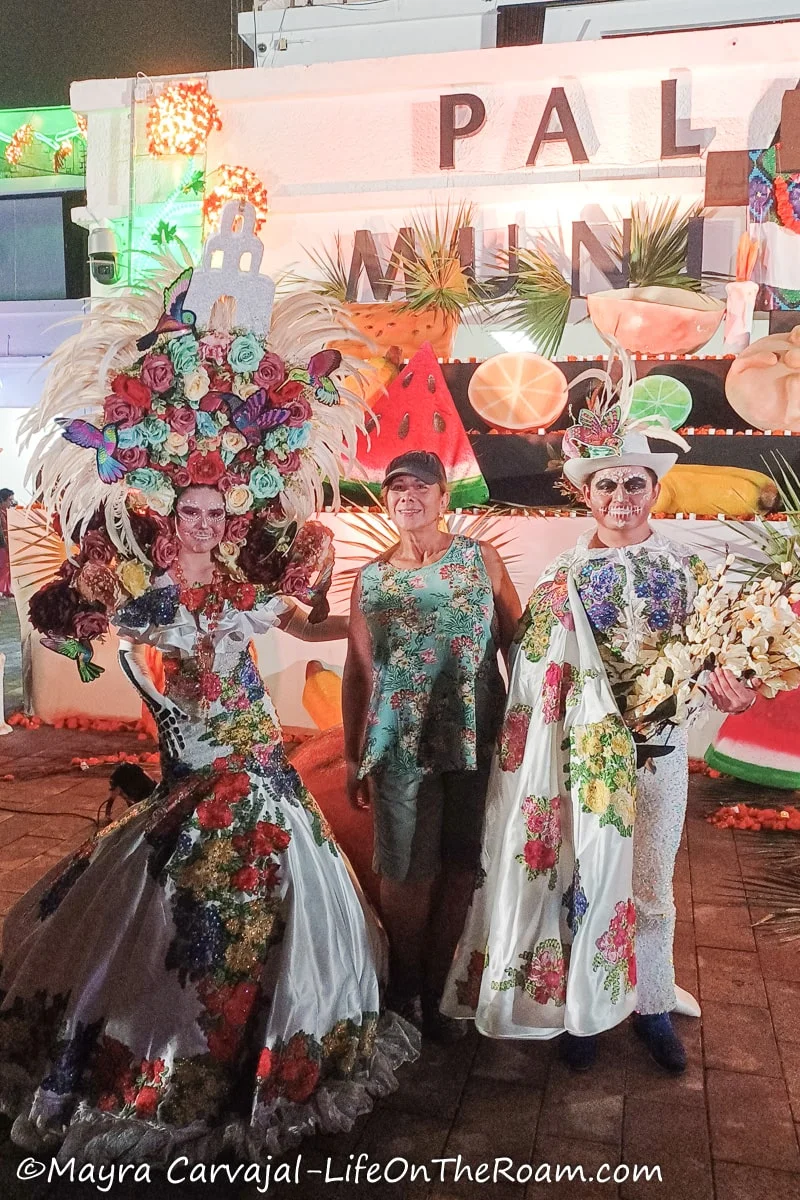
Some of the people who put together the altars dress up for the event wearing nice make up and they happily pose for pictures. And then you’ll be blown away by a few people dressed as Catrinas, wearing gorgeous, over-the-top original costumes. They’re the winners of the Catrina and Catrín contest happening on November 1st, who participate in the parade that ends at the City Hall square on November 2nd.
What about food? There’s an entire section with stands selling local specialties, including one of my favourites: marquesitas (a rolled wafer with different fillings and toppings).
As part of the celebrations, the city orders many big trays of Bread of the Dead (Pan de Muerto) and mukbilpollo (also known as pib), a special tamal available for the Day of Dead, filled with chicken or pork. I can’t tell you how it was because I don’t eat meat, but you can try it (for free) if you happen to be around when they serve it.
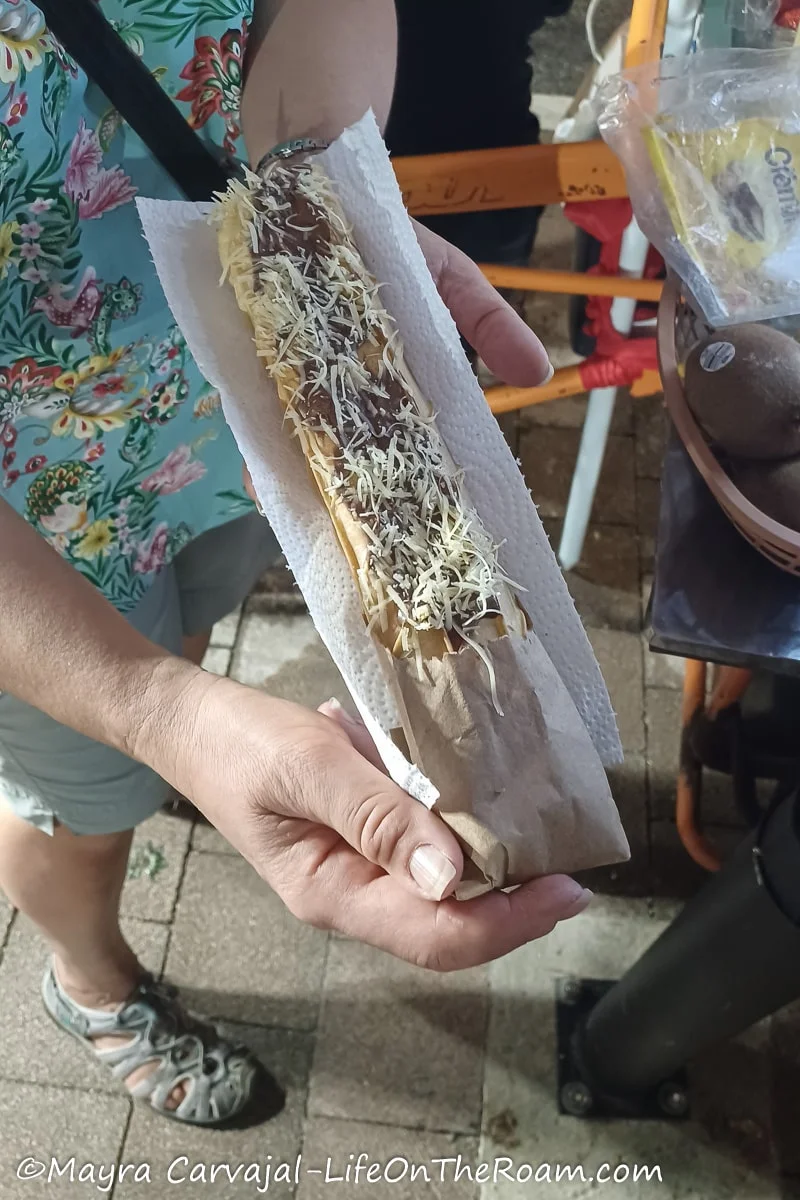
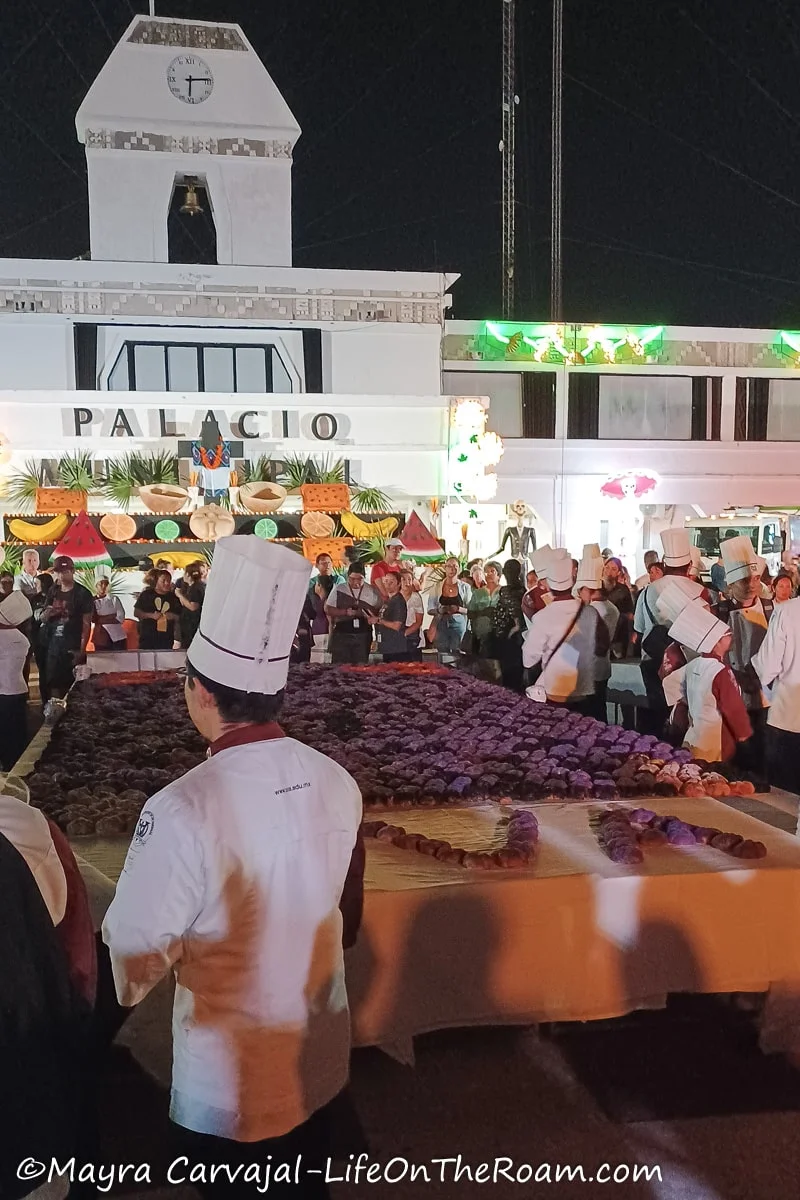
There are also kiosks selling handicrafts.
The event normally runs from October 31st to November 3rd.
Try the Bread of the Dead (Pan de Muerto)
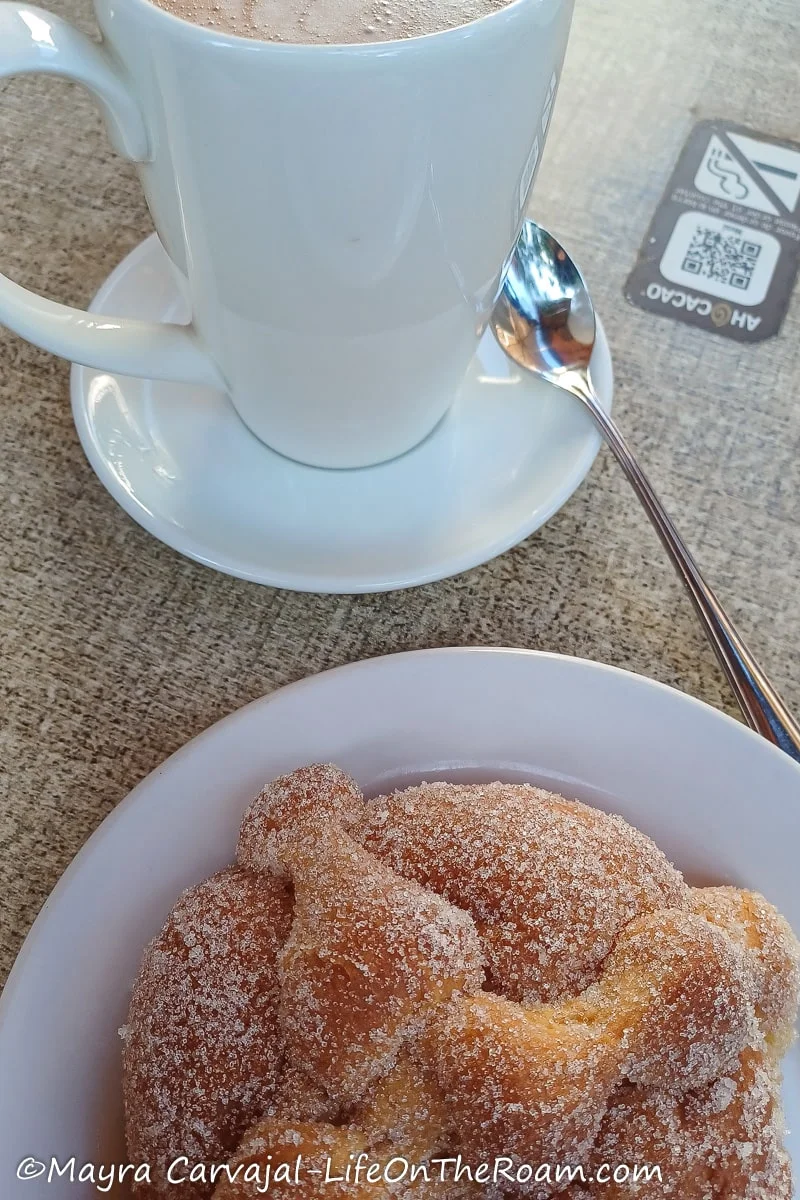
Pan de Muerto is a staple during this time and you’ll see it everywhere: at the bakeries, supermarkets, cafés, and especially in the Day of the Dead altars as an offering to those who are visiting from the other side. This sweet bread comes in the shape of a bun decorated with pieces of dough on the sides symbolizing cross bones, with a piece on top representing the skull. It’s glazed with orange and anise, with sugar sprinklered on top.
I enjoyed mine at one of the Ah Cacao cafés, with a cup of delicious hot chocolate.
Follow the Parade of the Pixanes
This isn’t a long mega-parade like the one you see in Mexico City, it’s way smaller and shorter but still fun as you see Catrinas and representations of the pixanes (the Mayan term for the spirits) filling the streets with music and colour.
The route starts at the intersection of Quinta Avenida and Av. Constituyentes and ends at Plaza 28 de julio, the square in front of City Hall. It happens on November 2nd at 6:30PM. Confirm time and place before going as this may change.
Visit Xcaret for the Festival of Life and Death Traditions
From October 30th to November 2nd Xcaret park joins the celebrations with its Festival of Life and Death Traditions, where every year they showcase a different state of Mexico and their unique twist to the festivities.
This is a more curated display than the ones you’ll see at the City Hall, with altars, performances, concerts, a handicraft market, and traditional food from the featured region (buffet not included).
You’ll see authentic stuff as people from the designated state come to Xcaret to work on the festival. You’ll also have the chance to appreciate the local traditions as Mayan communities are invited to participate.
General admission is around US$120 (if you buy the tickets at least 7 days in advance). It’s better if you add the round-trip transportation from your hotel as the taxis will charge you an arm and seven legs to get you out of there. Otherwise you’ll be better off renting a car for a few days and exploring other nearby sites like the ruins of Tulum.
The event runs from 4PM to 10:30PM.
For tickets visit www.xcaret.com/en/attractions/festival-of-life-and-death-traditions/
Accommodations in Playa del Carmen
Here are some highly rated options:
CasArte Boutique Hotel: located one block west of 5th Ave., this artsy and colourful hotel has outstanding reviews thanks to its design, comfort, and excellent customer service. The property has a sun terrace and a swimming pool.
Stay at this hotel, with a rating of 9.9/10 based on more than 140 reviews.
Palmar del Sol by Riviera Maya Suites: this is a good option if you’re looking for 2 or 3-bedroom furnished apartments with a kitchen. The property has a pool and a garden. It’s centrally located right off 5th Ave., close to everything. If you’re a light sleeper, bring earplugs.
Stay at these apartments, with a rating of 9.0/10 based on more than 1,120 reviews.
Condo Kiaraluna: if you don’t mind walking 6 minutes to 5th Avenue (which also means a quieter area), these modern suites come with a kitchen, flat-screen TV, AC, a dining table, a seating area, and a balcony. The property has a rooftop pool with a terrace.
Book this condo, with a rating of 9.6/10 based on more than 255 reviews.
Visiting Playa del Carmen during the Day of the Dead festivities offers a great opportunity to combine a relaxing time at the beach with one of the most joyful cultural experiences in Mexico. To learn more about the local culture, visit the nearby Mayan site of Cobá.
YOU MAY ALSO WANT TO READ

BOOKING FLIGHTS AND ACCOMMODATIONS
To get from A to B without losing your shirt
Skyscanner: to find cheap flights. Get notified of price drops with the “Price Alert” feature or use “Search Everywhere” to see where you can go without breaking the bank.
Busbud: to book bus tickets everywhere.
To find a place to stay for less
Booking.com: this site combines everything under the sun. You’ll find hotels, apartments, B&B, hostels, rooms, etc., with all sort of filters to make your search a breeze.
Hotwire: the first site I check when we plan to stay at a hotel for a few nights. You can save anything from 20% to 60%. Use the search filter to find what you want and you’ll end up with three listings that match your criteria. You’ll know which one you’ll get after you book. If you can handle a little bit of uncertainty you can score big savings.
House Sitting: you take care of people’s pets and house for free while staying for free. It’s the closest thing to experiencing a place “like a local”. But it comes with responsibilities… Are you an animal lover? It may become your new way to travel.
To get travel insurance
SafetyWing: travel medical insurance that gives us peace of mind knowing that we’re covered in case of emergency. It’s convenient, affordable, and suitable for digital nomads who spend a long time outside their home country.
Check the full list of travel resources on my Resource Page for more options and savings
